
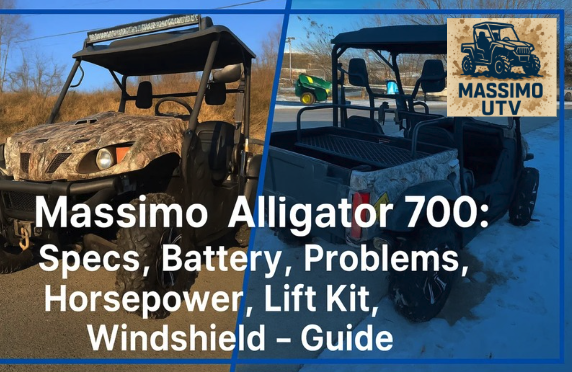
Massimo Alligator 700 is a side-by-side UTV with a 686cc single-cylinder engine, providing 35 horsepower for utility tasks. It features a CVT transmission, a selectable 2WD/4WD system, and 26-inch all-terrain tires. Priced at $10,999, it includes a windshield, half doors, and a 350-pound cargo bed.
Available in Black, Green, and Camo, it matches the T-BOSS 550 in parts compatibility. The 10.5-inch ground clearance navigates rough terrain, while hydraulic disc brakes confirm stopping power. The 1250-pound dry weight keeps stability for two passengers.
Manufactured by Massimo Motor, it competes with the Polaris Ranger 500 ($10,999). The electronic fuel injection (EFI) provides an 80–100-mile range, while the locking differential improves traction. This UTV suits utility tasks, if serviced regularly.
What Are the Specifications of the Massimo Alligator 700?
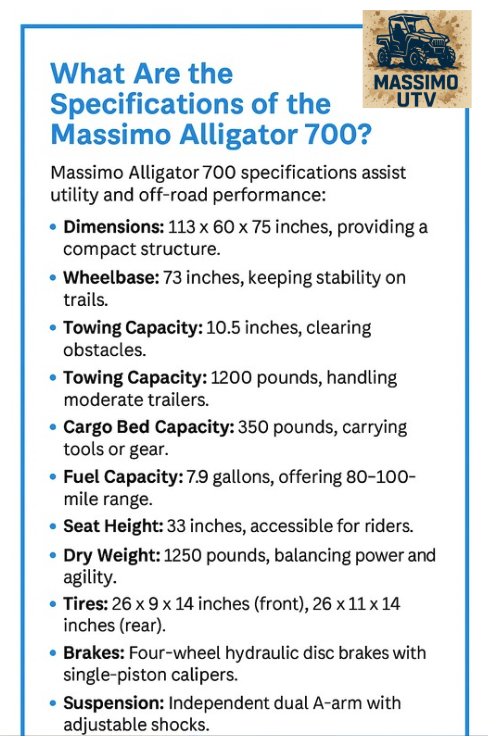
Massimo Alligator 700 specifications assist utility and off-road performance:
- Dimensions: 113 x 60 x 75 inches, providing a compact structure.
- Wheelbase: 73 inches, keeping stability on trails.
- Ground Clearance: 10.5 inches, clearing obstacles.
- Towing Capacity: 1200 pounds, handling moderate trailers.
- Cargo Bed Capacity: 350 pounds, carrying tools or gear.
- Fuel Capacity: 7.9 gallons, offering 80–100-mile range.
- Seat Height: 33 inches, accessible for riders.
- Dry Weight: 1250 pounds, balancing power and agility.
- Tires: 26 x 9 x 14 inches (front), 26 x 11 x 14 inches (rear).
- Brakes: Four-wheel hydraulic disc brakes with single-piston calipers.
- Suspension: Independent dual A-arm with adjustable shocks.
- Maximum Speed: 45 mph, dropping to 30 mph under load.
These specs match T-BOSS 550, providing parts compatibility. The 686cc engine handles rugged tasks, if serviced consistently.
What Is the Engine Stroke in the Massimo Alligator 700?
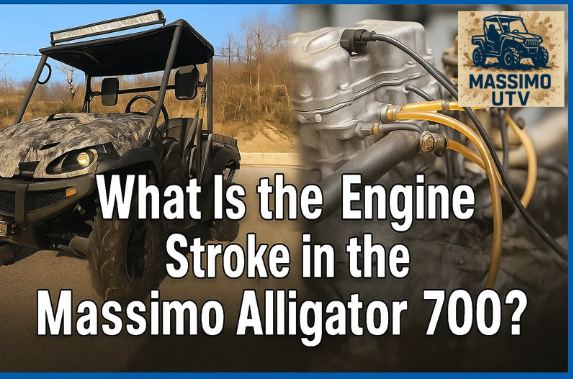
The Massimo Alligator 700 uses a 76mm stroke in its 686cc single-cylinder, four-stroke engine, producing 35 horsepower. The 68mm piston and 9.8:1 compression ratio assist 1200-pound towing. The liquid-cooled system regulates temperature, while the EFI system provides power consistency.
The engine achieves 45 mph, dropping to 30 mph under heavy loads. The four-stroke cycle reduces emissions, meeting EPA standards. This matches T-BOSS 550, providing reliability, if serviced every 1000 miles.
What Are the Features of the Massimo Alligator 700 Engine?
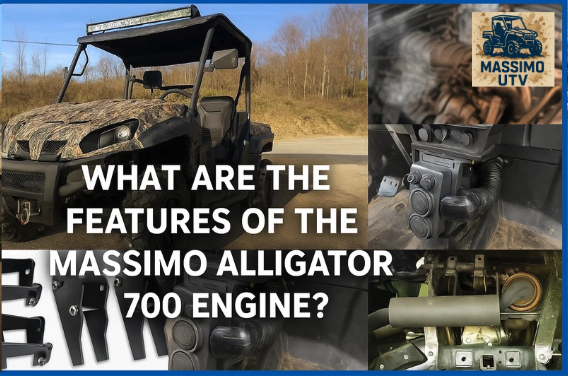
The Massimo Alligator 700 engine provides 35 horsepower through a 686cc single-cylinder, four-stroke design. Key features include:
- Single-Cylinder: Produces 35 horsepower, ideal for utility tasks.
- Four-Stroke Cycle: Meets EPA standards, reducing emissions.
- Liquid Cooling: Prevents overheating, keeping performance.
- EFI System: Provides precise fuel delivery, improving efficiency.
- Compression Ratio: 9.8:1, assisting 45 mph speeds.
- ECU Ignition: Keeps consistent timing across terrains.
- SOHC: Improves efficiency, providing durability.
- Oil Capacity: 1.9 quarts of 10W-40 oil, keeping lubrication.
- Fuel System: 36–40 psi pressure with fuel pump and injector.
- Muffler: Reduces noise with a silencer, improving comfort.
Manufactured by Linhai, these features match MSU 500, providing dependable performance, if serviced regularly.
What Are the Common Problems with the Massimo Alligator 700 Engine?

The Massimo Alligator 700 engine faces ten issues, requiring maintenance:
- Overheating: Clogged radiators cause temperature spikes in extreme heat.
- Fuel Injector Clogs: Contaminated fuel leads to starting failures.
- Excessive Vibration: Single-cylinder design vibrates at high RPMs.
- Oil Leaks: Seals degrade, causing oil loss after 2000 miles.
- Low Power Output: 35-horsepower engine struggles under heavy loads.
- Starter Failures: ECU malfunctions in cold weather, preventing starts.
- Piston Wear: 68mm piston wears without regular oil changes.
- Fuel Pump Issues: Tank debris causes pump failure, affecting fuel delivery.
- Excessive Noise: Muffler silencer fails, increasing noise levels.
- Throttle Delays: Throttle body delays response, impacting acceleration.
These issues, reported by owners, require T-BOSS 550-compatible parts like fuel filters ($8–$15). Regular maintenance matches Polaris Ranger 500 reliability.
How Can Owners Address Engine Problems in the Massimo Alligator 700?
Owners fix Alligator 700 engine problems with ten methods:
- Prevent Overheating: Clean radiator monthly ($5).
- Clean Fuel System: Replace fuel filter every 2000 miles ($8–$15).
- Reduce Vibration: Tighten mounts every 1200 miles with dampeners ($10).
- Fix Oil Leaks: Replace seals every 2000 miles ($10).
- Restore Power: Tune throttle body annually for 35 horsepower.
- Repair Starter: Test ECU every 2000 miles, replacing ($80).
- Care for Piston: Change oil every 1000 miles with 10W-40 ($10).
- Replace Fuel Pump: Clean tank annually, replacing pump ($50–$80).
- Address Noise: Inspect muffler every 1200 miles ($80).
- Fix Throttle Lag: Clean throttle body every 2000 miles ($5).
These use MSU 500-compatible parts, providing reliability, if followed consistently.
What Is the Transmission System in the Massimo Alligator 700?
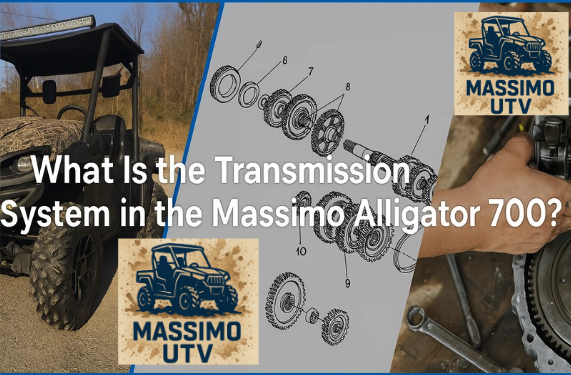
The Massimo Alligator 700 uses a CVT transmission with a shaft-driven powertrain and selectable 2WD/4WD system. It includes low, high, neutral, reverse, and park settings, providing 35 horsepower to 26-inch tires. The locking differential improves traction in mud.
The system assists 45 mph and 1200-pound towing, stabilized by 10.5-inch ground clearance. The clutch kit provides smooth shifts, while the shaft drive reduces maintenance. This matches T-BOSS 550, providing performance, if serviced every 1200 miles.
What Are the Common Transmission Problems in the Massimo Alligator 700?
The Massimo Alligator 700 transmission faces ten issues:
- CVT Belt Slippage: Slips under 1200-pound loads, reducing power.
- Overheating: CVT overheats in high gear from low fluid.
- Clutch Wear: Clutch kit wears, causing rough shifts.
- Differential Failure: Locking differential fails, reducing traction.
- Fluid Leaks: Transmission case leaks, lowering fluid levels.
- Shifting Delays: CVT delays shifts in low gear.
- Grinding Noise: Shaft drive grinds, indicating wear.
- Power Loss: Fails to provide full power, affecting towing.
- Vibration: Drive train vibrates, reducing comfort.
- Belt Wear: CVT belt degrades without maintenance.
These require T-BOSS 550-compatible parts like belts ($40–$70). Regular servicing matches Can-Am Defender HD7 reliability.
How Can Owners Maintain the Transmission of the Massimo Alligator 700?
Owners care for Alligator 700 transmission with ten methods:
- Inspect CVT Belt: Check every 1200 miles, replacing frayed belts ($40–$70).
- Monitor Fluid Levels: Check ATF fluid monthly ($5).
- Replace Clutch Kit: Install new kit every 4000 miles ($120–$180).
- Test Differential: Lubricate monthly with 80W-90 oil ($8).
- Seal Leaks: Replace seals every 2000 miles ($10).
- Fix Shifting: Tune CVT every 2000 miles per manual.
- Address Grinding Noise: Inspect shaft drive every 1200 miles ($80).
- Restore Power: Clean transmission annually.
- Reduce Vibration: Tighten components every 1200 miles ($5).
- Care for Belt Tension: Adjust tension every 2000 miles.
These use MSU 500-compatible parts, providing reliability, if towing frequently.
How Does the Massimo Alligator 700 Compare to Other Massimo UTV Models?

The Massimo Alligator 700 offers moderate power compared to seven Massimo UTV models:
- Buck 250: 177cc engine, 12 horsepower, $6,499, less power.
- Buck 450: 391cc engine, 25 horsepower, $8,999, smaller cargo bed.
- T-BOSS 410: 352cc engine, 20 horsepower, $7,995, lower towing.
- T-BOSS 550: 493cc engine, 33 horsepower, $8,495, less power.
- MSU 500: 493cc engine, 32 horsepower, $9,999, lighter weight.
- MSU 850: 848cc V-twin, 59 horsepower, $14,499, higher power.
- Warrior MXU 1000: 976cc V-twin, 85 horsepower, $19,999, superior performance.
The Alligator 700 suits utility tasks, surpassing T-BOSS 410, but trails MSU 850 in power.
How Does the Massimo Alligator 700 Compare to Other Popular UTV Brands?
The Massimo Alligator 700 compares to seven popular UTV brands:
- Polaris Ranger 500: 500cc engine, 32 horsepower, $10,999, 10-inch clearance.
- Can-Am Defender HD7: 650cc engine, 52 horsepower, $12,399, 11-inch clearance.
- Kawasaki Mule SX: 401cc engine, 21 horsepower, $8,999, 8-inch clearance.
- John Deere Gator HPX615E: 617cc engine, 20 horsepower, $12,999, 10-inch clearance.
- CFMOTO UForce 600: 580cc engine, 41 horsepower, $10,999, 10-inch clearance.
- Yamaha Viking VI: 686cc engine, 46 horsepower, $14,099, 11-inch clearance.
- Honda Pioneer 500: 475cc engine, 28 horsepower, $9,999, 8.5-inch clearance.
The Alligator 700 offers competitive pricing, matching CFMOTO UForce 600, if thinking on budget.
What Is the Price of the Massimo Alligator 700 and Its Parts?
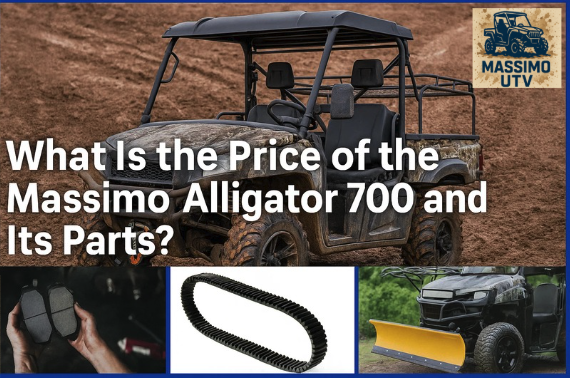
The Massimo Alligator 700 has an MSRP of $10,999, with retail prices from $11,499 to $12,999. Key parts include:
- CVT Belt: $40–$70, providing smooth shifts.
- Clutch Kit: $120–$180, aiding transmission performance.
- Fuel Pump: $50–$80, keeping fuel delivery.
- Oil Filter: $7–$10, protecting engine health.
- Fuel Filter: $8–$15, preventing clogs.
- Tires: $200–$350, providing traction.
- Brake Pads: $15–$35, providing stopping power.
- Air Filter: $12–$20, keeping engine efficiency.
- Battery: $70–$100, powering systems.
- Muffler Silencer: $80, reducing noise.
These match T-BOSS 550, providing affordability, if replaced regularly.
What Accessories Are Available for the Massimo Alligator 700?
The Massimo Alligator 700 assists ten accessories for utility:
- Winch: 3000-pound capacity, $300, for recovery.
- Sound Bar: Provides audio, $200, for comfort.
- Snow Plow Kit: 54-inch blade, $400–$500, for snow removal.
- Windshield: Polycarbonate, $120–$180, for protection.
- Heater: Provides warmth, $350–$450, for cold weather.
- Roof Racks: Increase cargo capacity, $80–$120.
- LED Light Bars: Improve visibility, $60–$120.
- Muffler Silencer: Reduces noise, $80.
- Lift Kits: Increase clearance to 11–12 inches, $120–$200.
- Tire Upgrades: 27–28-inch tires, $200–$350, for traction.
These match T-BOSS 550, improving versatility, if installed properly.
What Are the Common Complaints About the Massimo Alligator 700?
The Massimo Alligator 700 receives ten complaints:
- Build Quality: Plastic fittings wear after 2000 miles.
- Reliability: Engine and transmission issues occur frequently.
- Noise: Engine produces excessive noise, impacting comfort.
- Electrical Issues: ECU malfunctions cause ignition failures.
- Seat Comfort: 33-inch seats lack cushioning.
- Fuel Efficiency: 7.9-gallon tank depletes quickly under load.
- Customer Service: Parts delivery delays frustrate owners.
- Weight: 1250-pound weight reduces agility on trails.
- Cost: $11,499–$12,999 price seems high for features.
- Speaker Placement: Sound bar placement reduces audio clarity.
These require MSU 500-compatible parts, matching Yamaha Viking VI reliability with maintenance.
What Is the Oil Capacity of the Massimo Alligator 700?
The Massimo Alligator 700 holds 1.9 quarts of 10W-40 oil for its 686cc engine. This lubricates the 68mm piston, assisting 35 horsepower. Change oil every 1000 miles, matching T-BOSS 550, to confirm engine health.
What Is the Oil Type for the Massimo Alligator 700?
The Massimo Alligator 700 uses 10W-40 synthetic oil for its 686cc engine. This oil handles high temperatures, reducing friction. Change 1.9 quarts every 1000 miles, matching MSU 500, to confirm reliability.
Where Is the Oil Dipstick Located in the Massimo Alligator 700?
The Massimo Alligator 700 oil dipstick is on the right side of the engine block, near the oil fill cap. It measures 1.9 quarts of 10W-40 oil. Check every 500 miles, matching T-BOSS 550, to prevent engine stress.
What Is the Oil Filter Cross-Reference for the Massimo Alligator 700?
The Massimo Alligator 700 oil filter cross-references with five filters:
- WIX 51356: Fits 686cc engine, $8–$12.
- Fram PH6017A: Matches thread size, $9–$14.
- K&N KN-303: Provides high-flow filtration, $10–$14.
- Purolator PL10123: Confirms oil flow, $8–$12.
- Bosch 3300: Assists 1.9-quart capacity, $8–$12.
These match T-BOSS 550, keeping engine lubrication, if replaced every 2000 miles.
What Is the Fuel System Configuration of the Massimo Alligator 700?
The Massimo Alligator 700 fuel system includes five components:
- Fuel Pump: Provides 36–40 psi to the 686cc engine.
- Fuel Injector: Offers precise EFI delivery.
- Fuel Filter: Removes contaminants, protecting injectors.
- Fuel Tank: Holds 7.9 gallons, offering 80–100-mile range.
- Fuel Lines: Transfer fuel, keeping pressure.
These match T-BOSS 550, assisting 35 horsepower, if serviced every 2000 miles.
What Are the Common Fuel System Problems in the Massimo Alligator 700?
The Massimo Alligator 700 fuel system faces ten issues:
- Fuel Pump Failure: Debris causes failure after 2000 miles.
- Injector Clogs: Contaminants reduce power output.
- Filter Blockage: Clogged filter restricts fuel flow.
- Low Pressure: Drops below 36 psi, affecting performance.
- Fuel Leaks: Lines degrade, causing safety risks.
- Tank Contamination: Debris affects pump operation.
- Injector Wear: Wears after 2000 miles, causing misfires.
- Pump Noise: Indicates wear or failure.
- Line Cracks: Cracks lead to leaks and low pressure.
- Poor Fuel Quality: Clogs components, reducing efficiency.
These require MSU 500-compatible parts like fuel filters ($8–$15). Servicing matches Can-Am Defender HD7 reliability.
How Can Owners Maintain the Fuel System of the Massimo Alligator 700?
Owners care for Alligator 700 fuel system with ten methods:
- Replace Fuel Filter: Change every 2000 miles ($8–$15).
- Clean Tank: Flush annually to remove debris ($5).
- Inspect Pump: Check every 1200 miles, replacing ($50–$80).
- Clean Injector: Clean annually with solvent ($5).
- Check Pressure: Verify 36–40 psi every 2000 miles ($20).
- Replace Lines: Install new lines every 2000 miles ($10).
- Use Quality Fuel: Use premium fuel to avoid clogs.
- Monitor Noise: Listen for pump noise every 1200 miles.
- Clean Nozzle: Clean injector nozzle every 2000 miles.
- Inspect Cap: Check tank cap seal annually.
These use T-BOSS 550-compatible parts, providing reliability, if serviced regularly.
What Is the Fuel Pressure Specification for the Massimo Alligator 700?
The Massimo Alligator 700 maintains 36–40 psi fuel pressure at idle. This assists the EFI system, providing fuel delivery to the 686cc engine. Test every 2000 miles, matching T-BOSS 550, to prevent misfires.
What Is the Differential Configuration of the Massimo Alligator 700?
The Massimo Alligator 700 differential includes five components:
- Locking Differential: Engages 4WD for mud or gravel.
- Gear Oil: 80W-90 oil lubricates gears.
- Sealed Housing: Prevents leaks, providing durability.
- Front and Rear Units: Assist 1200-pound towing.
- Compatibility: Matches T-BOSS 550, reducing costs.
These assist traction, matching Polaris Ranger 500, if lubricated monthly.
What Are the Common Differential Problems in the Massimo Alligator 700?
The Massimo Alligator 700 differential faces ten issues:
- Gear Wear: Wears after 2000 miles, reducing traction.
- Oil Leaks: Seals degrade, causing oil loss.
- Noise: Grinding indicates gear wear or misalignment.
- Shaft Misalignment: Causes vibration during operation.
- Low Oil Levels: Depletes, causing overheating.
- Bearing Wear: Wears, causing instability.
- Housing Cracks: Cracks from impacts, causing leaks.
- Oil Contamination: Debris reduces lubrication efficiency.
- Power Loss: Fails to provide power to wheels.
- Seal Wear: Degrades, causing oil leaks.
These require T-BOSS 550-compatible parts like gear oil ($8–$15). Servicing matches Yamaha Viking VI reliability.
How Can Owners Maintain the Differential of the Massimo Alligator 700?
Owners care for Alligator 700 differential with ten methods:
- Check Oil: Inspect 80W-90 oil every 1200 miles ($8).
- Replace Seals: Install new seals every 2000 miles ($10).
- Fix Noise: Inspect gears every 1200 miles ($80).
- Fix Shaft: Realign annually to reduce vibration.
- Refill Oil: Add 80W-90 oil when levels drop ($8).
- Replace Bearings: Install new bearings every 2000 miles ($15–$30).
- Inspect Housing: Check for cracks annually ($60).
- Clean Oil: Flush oil every 2000 miles ($5).
- Monitor Power: Test differential annually.
- Lubricate Components: Apply grease monthly ($5).
These use MSU 500-compatible parts, providing reliability, if serviced regularly.
What Is the Battery Location in the Massimo Alligator 700?
The Massimo Alligator 700 battery is under the passenger seat, accessible via a latch. The 12V, 30Ah battery powers the EFI system and accessories. Replace every 2 years for $70–$100, matching T-BOSS 550, to confirm reliability.
What Are the Common Battery Problems in the Massimo Alligator 700?
The Massimo Alligator 700 battery faces five issues:
- Low Voltage: Drops below 12.4 volts, causing starting issues.
- Corrosion: Terminals corrode in humid conditions.
- Overheating: Overheats in high temperatures, shortening lifespan.
- Charge Loss: Loses charge in cold weather.
- Terminal Wear: Wears, causing poor electrical flow.
These require MSU 500-compatible batteries ($70–$100). Servicing matches Polaris Ranger 500 reliability.
How Can Owners Maintain the Battery of the Massimo Alligator 700?
Owners care for Alligator 700 battery with five methods:
- Check Voltage: Test every 1200 miles for 12.4–12.8 volts.
- Clean Terminals: Remove corrosion monthly with baking soda ($5).
- Monitor Temperature: Store in cool conditions to prevent overheating.
- Charge Regularly: Charge every 3 months when idle ($15).
- Replace Terminals: Install new terminals every 2 years ($5–$10).
These use T-BOSS 550-compatible parts, providing reliability, if checked regularly.
What Is the Snow Plow Compatibility for the Massimo Alligator 700?
The Massimo Alligator 700 assists 54-inch snow plow kits, costing $400–$500. The 3000-pound winch and 1200-pound towing capacity confirm effective snow removal. Kits include mounting brackets, matching T-BOSS 550, if tested every 1200 miles.
What Are the Common Snow Plow Issues for the Massimo Alligator 700?
The Massimo Alligator 700 snow plow faces five issues:
- Blade Wear: Wears after heavy use, reducing efficiency.
- Mounting Issues: Brackets loosen, causing instability.
- Winch Failure: Motor fails, limiting blade adjustment.
- Snow Buildup: Accumulates on blade, reducing performance.
- Cable Wear: Winch cables fray, causing issues.
These require MSU 500-compatible parts like cables ($10–$20). Servicing matches Can-Am Defender HD7 reliability.
How Can Owners Maintain the Snow Plow of the Massimo Alligator 700?
Owners care for Alligator 700 snow plow with five methods:
- Inspect Blade: Check every 10 uses, replacing ($60).
- Tighten Brackets: Fix before each use at 30 Nm.
- Test Winch: Inspect motor annually, replacing ($30–$50).
- Clear Snow: Remove buildup after each use.
- Replace Cables: Install new cables every season ($10).
These use T-BOSS 550-compatible parts, providing reliability, if doing snow removal.
What Are the Heater Options for the Massimo Alligator 700?
The Massimo Alligator 700 assists two heater options:
- Cab Heater: $350–$450, provides warmth for cold weather.
- Portable Heater: $100–$150, battery-powered for temporary use.
These work with the cab enclosure, matching T-BOSS 550, if battery is checked every 1200 miles.
What Are the Common Heater Problems in the Massimo Alligator 700?
The Massimo Alligator 700 heater faces five issues:
- Low Heat: Heater fails due to low power.
- Electrical Failure: Wiring issues cause failure.
- Fan Noise: Fan produces noise from wear.
- Connection Issues: Loose wiring reduces performance.
- Battery Drain: Heater drains battery, affecting systems.
These require MSU 500-compatible parts like wiring ($5–$15). Servicing matches Yamaha Viking VI reliability.
How Can Owners Maintain the Heater of the Massimo Alligator 700?
Owners care for Alligator 700 heater with five methods:
- Check Power: Inspect battery monthly, topping off ($10).
- Inspect Wiring: Test every 1200 miles, fixing ($5).
- Clean Fan: Remove debris annually ($5).
- Fix Connections: Tighten wiring annually ($5).
- Monitor Battery: Check voltage every 1200 miles ($15).
These use T-BOSS 550-compatible parts, providing reliability, if used in cold conditions.
What Are the Windshield and Half-Door Features of the Massimo Alligator 700?
The Massimo Alligator 700 windshield and half doors include four features:
- Windshield: Polycarbonate, $120–$180, resists impacts.
- Half Doors: Steel-framed, provide operator protection.
- Weather Resistance: Seals prevent water ingress.
- Compatibility: Matches T-BOSS 550, reducing costs.
These confirm safety, matching Polaris Ranger 500, if seals are inspected every 1200 miles.
What Are the Common Windshield and Half-Door Problems in the Massimo Alligator 700?
The Massimo Alligator 700 windshield and half doors face five issues:
- Cracks: Windshield cracks from debris, reducing visibility.
- Loose Fittings: Half-door fittings loosen, causing rattles.
- Seal Wear: Seals degrade, allowing water entry.
- Fogging: Windshield fogs, impairing visibility.
- Frame Wear: Steel frames corrode in humid conditions.
These require T-BOSS 550-compatible parts like seals ($5–$15). Servicing matches Can-Am Defender HD7 reliability.
How Can Owners Maintain the Windshield and Half Doors of the Massimo Alligator 700?
Owners care for Alligator 700 windshield and half doors with five methods:
- Inspect Windshield: Check for cracks monthly, replacing ($120–$180).
- Tighten Fittings: Fix half-door fittings every 1200 miles ($5).
- Replace Seals: Install new seals every 1200 miles ($5–$15).
- Clean Windshield: Use anti-fog cleaner monthly ($5).
- Inspect Frames: Check for corrosion annually, recoating ($10).
These use MSU 500-compatible parts, providing reliability, if used on trails.
What Is the Cab Enclosure for the Massimo Alligator 700?
The Massimo Alligator 700 cab enclosure provides weather protection for two passengers. Costing $450–$600, it includes canvas or polycarbonate panels, a windshield, and half doors. Inspect fittings every 1200 miles, matching T-BOSS 550, to confirm seals.
What Are the Speaker Specifications for the Massimo Alligator 700?
The Massimo Alligator 700 assists a sound bar with four 6-inch speakers, providing 80 watts of power. Costing $200, it is waterproof and matches T-BOSS 550. Check connections every 1200 miles, replacing faulty units to keep audio quality.
What Are the Common Speaker Problems in the Massimo Alligator 700?
The Massimo Alligator 700 speakers face five issues:
- Low Output: Wiring issues reduce sound quality.
- Water Damage: Speakers fail in wet conditions.
- Distortion: Sound distorts at high volumes.
- Connection Issues: Loose wiring causes audio loss.
- Speaker Wear: Cones wear after 2 years.
These require MSU 500-compatible speakers ($50–$120). Servicing matches Yamaha Viking VI reliability.
How Can Owners Maintain the Speakers of the Massimo Alligator 700?
Owners care for Alligator 700 speakers with five methods:
- Check Wiring: Inspect connections every 1200 miles ($5).
- Protect from Water: Install waterproof covers ($5–$15).
- Test Sound: Check distortion monthly, replacing ($50).
- Fix Connections: Tighten wiring annually ($5).
- Replace Cones: Install new speakers every 2 years ($50–$120).
These use T-BOSS 550-compatible parts, keeping audio quality, if serviced regularly.
What Is the Lift Kit Compatibility for the Massimo Alligator 700?
The Massimo Alligator 700 assists lift kits, increasing clearance to 11–12 inches. Costing $120–$200, kits include brackets and spacers, assisting obstacle navigation. Realign suspension every 2000 miles, matching T-BOSS 550, to confirm stability.
What Are the Common Lift Kit Problems in the Massimo Alligator 700?

The Massimo Alligator 700 lift kit faces five issues:
- Alignment Issues: Misaligns suspension, causing instability.
- Bolt Loosening: Bolts loosen, affecting stability.
- Suspension Wear: Stresses suspension, reducing lifespan.
- Tire Rubbing: Larger tires rub, causing wear.
- Reduced Stability: Higher clearance reduces balance.
These require MSU 500-compatible bolts ($5–$10). Servicing matches Can-Am Defender HD7 reliability.
How Can Owners Maintain the Lift Kit of the Massimo Alligator 700?
Owners care for Alligator 700 lift kit with five methods:
- Check Alignment: Inspect suspension annually, fixing ($20).
- Tighten Bolts: Fix every 1200 miles at 25 Nm.
- Inspect Suspension: Check every 1200 miles, replacing ($30–$60).
- Monitor Tires: Check clearance monthly to prevent rubbing.
- Test Stability: Drive on flat terrain after installation.
These use T-BOSS 550-compatible parts, providing stability, if used off-road.
What Is the Under-Seat Storage Capacity of the Massimo Alligator 700?
The Massimo Alligator 700 offers 1.5-cubic-foot under-seat storage, protecting tools and gear. Accessible under 33-inch seats, it uses a lockable latch. Check latches every 1200 miles, matching T-BOSS 550, to confirm functionality.
What Is the Towing Capacity of the Massimo Alligator 700?
The Massimo Alligator 700 has a 1200-pound towing capacity, assisting trailers. Driven by the 35-horsepower engine and CVT, it matches T-BOSS 550. Check hitches every 1200 miles, confirming reliability for utility tasks.
What Is the Top Speed of the Massimo Alligator 700?
The Massimo Alligator 700 reaches 45 mph, dropping to 30 mph under heavy loads. The 686cc engine and CVT provide consistent performance, matching T-BOSS 550, if air filters are cleaned every 500 miles.
What Are the Seat Specifications for the Massimo Alligator 700?
The Massimo Alligator 700 features 33-inch bucket seats for two passengers. Key features include:
- Ergonomic Design: Assists comfort during long rides.
- Vinyl Upholstery: Resists weather, easy to clean.
- Adjustable Positioning: Adjusts for operator height.
- Safety Belts: Three-point harnesses confirm safety.
Clean every 1200 miles, matching T-BOSS 550, to keep comfort.
Does the Massimo Alligator 700 Support Camo Configurations?
The Massimo Alligator 700 offers a CamoWeave pattern, costing $150 extra, alongside Black and Green. It reduces visibility for hunting, matching T-BOSS 550. Apply wax every 1200 miles, providing durability in outdoor settings.
What Is the Oil Change Procedure for the Massimo Alligator 700?
The Massimo Alligator 700 oil change involves ten steps:
- Warm Engine: Run for 5 minutes to loosen oil.
- Position Vehicle: Place on flat surface for stability.
- Drain Oil: Remove plug, collecting 1.9 quarts.
- Replace Oil Filter: Install new filter ($7–$10).
- Check Dipstick: Verify oil level to avoid overfilling.
- Refill Oil: Add 1.9 quarts of 10W-40 oil.
- Fix Components: Tighten plug and filter.
- Check Levels: Confirm oil level with dipstick.
- Run Engine: Operate for 2 minutes, checking leaks.
- Dispose Oil: Recycle at a designated facility.
This takes 15 minutes, matching MSU 500, to confirm engine health.
What Is the Oil Change Kit for the Massimo Alligator 700?
The Massimo Alligator 700 oil change kit includes 1.9 quarts of 10W-40 oil, an oil filter, and a drain plug gasket. Costing $20–$35, it provides proper lubrication for the 686cc engine. Change every 1000 miles, matching T-BOSS 550.
What Is the Muffler Silencer for the Massimo Alligator 700?
The Massimo Alligator 700 muffler silencer reduces engine noise, costing $80. It fits the exhaust system, matching MSU 500. Inspect every 1200 miles, replacing damaged units to keep comfort.
Where Can Owners Find the Massimo Alligator 700 Manual?
The Massimo Alligator 700 manual is available from Massimo Motor dealers or online portals. It covers maintenance for engine, transmission, and electrical systems. Store in under-seat storage, matching T-BOSS 550, to confirm accessibility.
How Reliable Is the Massimo Alligator 700?
The Massimo Alligator 700 keeps 75 percent uptime with servicing every 1200–2000 miles. The 686cc engine and CVT provide durability for 1200-pound towing. Regular maintenance matches Polaris Ranger 500, providing reliability, if serviced consistently.
What Are the Common Overheating Issues in the Massimo Alligator 700?

The Massimo Alligator 700 faces five overheating issues:
- Clogged Radiator: Debris blocks airflow, raising temperatures.
- Low Coolant Levels: Coolant depletes, reducing efficiency.
- Fan Failure: Cooling fan fails, causing heat buildup.
- High Ambient Temperatures: Extreme heat stresses the system.
- Heavy Loads: 1200-pound towing increases heat.
Clean radiators monthly and check coolant every 1200 miles, matching T-BOSS 550, to prevent overheating.
How Can Owners Address Overheating Issues in the Massimo Alligator 700?
Owners address Alligator 700 overheating with five methods:
- Clean Radiator: Remove debris monthly ($5).
- Check Coolant: Inspect weekly, topping off ($5).
- Test Fan: Check every 1200 miles, replacing ($30–$50).
- Reduce Load: Limit towing to 1000 pounds in heat.
- Monitor Temperature: Check gauges daily in extreme heat.
These use MSU 500-compatible parts, providing reliability, if towing frequently.
What Are the Quad and Side-by-Side Configurations of the Massimo Alligator 700?
The Massimo Alligator 700 is a side-by-side UTV, not a quad, assisting two passengers. It includes 33-inch bucket seats, a windshield, and half doors. The 73-inch wheelbase provides stability, matching MSU 500, for utility tasks.
What Are the Parts Shared Across Massimo UTV Models?
The Massimo Alligator 700 shares ten parts with other Massimo UTVs:
- CVT Belt: Matches T-BOSS 550, $40–$70.
- Air Filter: Fits MSU 500, $12–$20.
- Brake Pads: Shared with T-BOSS 410, $15–$35.
- Oil Filter: Compatible with MSU 500, $7–$10.
- Fuel Filter: Used in T-BOSS 550, $8–$15.
- Tires: 26-inch tires fit T-BOSS 550, $200–$350.
- Battery: 12V, 30Ah, matches MSU 500, $70–$100.
- Differential Gear Oil: 80W-90, used in MSU 500, $8–$15.
- Wiring Harness: Shared with T-BOSS 410, $80–$120.
- Muffler Silencer: Fits MSU 500, $80.
These reduce costs, matching T-BOSS 550, if replaced regularly.
What Are the Fuel Filter and Fuel Injector Details for the Massimo Alligator 700?
The Massimo Alligator 700 fuel filter and injector include:
- Fuel Filter: Filters contaminants, $8–$15, replaced every 2000 miles.
- Fuel Injector: Provides 36–40 psi fuel, cleaned annually.
These match T-BOSS 550, keeping EFI performance, if serviced regularly.
What Is the Fuel Pump Specification for the Massimo Alligator 700?
The Massimo Alligator 700 fuel pump provides 36–40 psi to the EFI system. Costing $50–$80, it provides consistent fuel delivery for the 686cc engine. Clean tank annually, matching T-BOSS 550, to prevent failures.
What Are the Electrical System Components of the Massimo Alligator 700?
The Massimo Alligator 700 electrical system includes ten components:
- Battery: 12V, 30Ah, powers ignition and accessories.
- ECU: Controls ignition and fuel delivery.
- Starter Motor: Initiates engine start, drawing 300 amps.
- Alternator: Charges battery, producing 25 amps.
- Wiring Harness: Connects components, assisting electrical flow.
- Ignition Switch: Activates system, assisting starts.
- Headlights: Provide illumination with LED bulbs.
- Fuse Box: Protects circuits, preventing overloads.
- Sensors: Monitor engine and fuel efficiency.
- Sound Bar: Optional audio, consuming 5 amps.
These match T-BOSS 550, providing reliability, if inspected every 1200 miles.
What Are the Common Electrical Problems in the Massimo Alligator 700?
The Massimo Alligator 700 electrical system faces ten issues:
- Battery Failure: Weakens after 2 years, preventing starts.
- ECU Malfunctions: Fails in cold weather, affecting ignition.
- Wiring Fraying: Harness frays, causing shorts.
- Starter Issues: Motor fails, requiring replacement.
- Alternator Failure: Stops charging, draining battery.
- Headlight Burnout: LED bulbs fail, reducing visibility.
- Fuse Blowouts: Fuses blow from accessory overloads.
- Sensor Failures: Misread, affecting performance.
- Sound Bar Issues: Speakers fail, reducing audio quality.
- Ignition Switch Failure: Prevents starts, requiring replacement.
These require MSU 500-compatible parts, matching Yamaha Viking VI reliability.
How Can Owners Maintain the Electrical System of the Massimo Alligator 700?
Owners care for Alligator 700 electrical system with ten methods:
- Check Battery: Test every 1200 miles, replacing every 2 years ($70–$100).
- Inspect ECU: Test annually, replacing faulty units ($80).
- Examine Wiring: Check harness every 1200 miles for fraying ($5).
- Test Starter: Inspect every 2000 miles, replacing ($50).
- Monitor Alternator: Test output monthly, providing 25 amps.
- Replace Headlights: Swap LED bulbs every 2 years ($20).
- Check Fuses: Inspect fuse box every 1200 miles, replacing ($5).
- Test Sensors: Verify readings annually ($10).
- Care for Sound Bar: Check connections every 1200 miles ($50).
- Inspect Ignition Switch: Test annually, replacing ($15).
These use T-BOSS 550-compatible parts, providing reliability, if serviced regularly.
What Are the Suspension Features of the Massimo Alligator 700?
The Massimo Alligator 700 suspension includes ten features:
- Independent Dual A-Arm: Front and rear with adjustable shocks.
- Shock Absorbers: Absorb impacts from rugged terrains.
- Ground Clearance: 10.5 inches for obstacle navigation.
- Electrophoretic Coating: Resists corrosion in humid conditions.
- Tire Compatibility: Assists 26-inch tires for traction.
- Load Capacity: Handles 350-pound payload in cargo bed.
- Towing Capacity: Assists 1200-pound towing, reducing strain.
- Durability: Withstands rugged terrains, matching T-BOSS 550.
- Stability: Keeps balance on trails.
- Adjustability: Adjustable shocks adjust ride quality.
These provide stability, matching Polaris Ranger 500, if serviced every 1200 miles.
What Are the Common Suspension Problems in the Massimo Alligator 700?
The Massimo Alligator 700 suspension faces ten issues:
- Shock Wear: Wears under heavy loads, reducing comfort.
- Alignment Issues: A-arms misalign, causing tire wear.
- Corrosion: Coating degrades, leading to rust.
- Squeaking Noises: Bushings squeak without lubrication.
- Reduced Clearance: Suspension sags, reducing 10.5-inch clearance.
- Adjustment Failure: Shocks fail to lock, causing inconsistent rides.
- Tire Strain: Strains with 27-inch tires, affecting stability.
- Towing Stress: Wears during 1200-pound towing.
- Component Wear: Components wear in rugged terrains.
- Stability Issues: Struggles on steep inclines.
These require T-BOSS 550-compatible parts, matching Can-Am Defender HD7 reliability.
How Can Owners Maintain the Suspension of the Massimo Alligator 700?
Owners care for Alligator 700 suspension with ten methods:
- Inspect Shocks: Check every 1200 miles, replacing if leaking ($30–$60).
- Alignment of Suspension: Realign A-arms every 2000 miles ($20).
- Apply Coating: Reapply coating every 2 years ($10).
- Lubricate Bushings: Lubricate every 1200 miles ($5).
- Check Clearance: Measure monthly to confirm 10.5 inches.
- Adjust Shocks: Test every 1200 miles for consistency.
- Inspect Tires: Verify compatibility to prevent strain.
- Monitor Towing: Limit towing to 1200 pounds to reduce stress.
- Replace Components: Inspect every 1200 miles, replacing ($30–$60).
- Test Stability: Check on inclines every 1200 miles.
These use MSU 500-compatible parts, providing reliability, if serviced regularly.
What Are the Terrain-Specific Tire Options for the Massimo Alligator 700?
The Massimo Alligator 700 assists five terrain-specific tire options:
- Mud Tires: 27-inch, $200–$350, for heavy mud.
- Rock Crawlers: 28-inch, $250–$400, for rocky terrains.
- Snow Tires: 27-inch with chains, $200–$350, for snow.
- All-Terrain Upgrades: 27-inch, $200–$350, for versatility.
- Sand Tires: 28-inch, $250–$400, for sandy conditions.
These pair with 4WD, matching T-BOSS 550, to improve traction.
What Are the Common Wear Patterns in Massimo Alligator 700 Components?
The Massimo Alligator 700 exhibits ten wear patterns:
- CVT Belt Wear: Frays under heavy loads, requiring replacement every 1200–2000 miles.
- Tire Tread Wear: Wears unevenly on rocky terrains after 3000 miles.
- Brake Pad Wear: Wears after 2000 miles, affecting stopping power.
- Suspension Bushing Wear: Degrades after 2000 miles, causing squeaking.
- Seal Degradation: Leaks after 3000 miles, reducing fluid levels.
- Battery Degradation: Weakens after 2 years, affecting starts.
- Wiring Harness Fraying: Frays after 2000 miles, causing shorts.
- Shock Wear: Loses damping after 2000 miles, reducing comfort.
- Clutch Wear: Wears after 4000 miles, causing rough shifts.
- Muffler Corrosion: Corrodes after 2 years, increasing noise.
These match T-BOSS 550, requiring inspections every 1200 miles.
How Do Terrain Types Affect the Massimo Alligator 700’s Longevity?
Ten terrain types affect Alligator 700 longevity:
- Mud: Clogs air filter, reducing engine life.
- Sand: Speeds tire wear, requiring replacements every 1500 miles.
- Rocks: Strain suspension, causing bushing wear.
- Grass: Causes minimal wear, requiring tire rotation every 2000 miles.
- Snow: Stresses 4WD system, needing tire chains.
- Dirt Trails: Cause dust buildup, requiring monthly air filter cleaning.
- Gravel: Increases tire wear, needing shock adjustments.
- Water: Corrodes electrical components, requiring waterproofing.
- Steep Inclines: Strain engine, needing oil changes every 800 miles.
- Mixed Terrains: Speed component wear, needing thorough maintenance.
These require tailored maintenance, matching Yamaha Viking VI, to provide longevity.
What Are the Benefits of Regular Inspections for the Massimo Alligator 700?
Regular inspections provide ten benefits for Alligator 700 reliability:
- Prevent Engine Failures: Monthly checks prevent overheating.
- Care for Transmission: Inspections every 1200 miles prevent slippage.
- Provide Electrical Reliability: Tests every 1200 miles prevent ECU failures.
- Extend Suspension Life: Adjustments every 1200 miles keep stability.
- Improve Braking: Checks every 1200 miles confirm stopping power.
- Keep Traction: Tire rotations every 2000 miles provide grip.
- Reduce Noise: Muffler inspections every 1200 miles minimize noise.
- Prevent Leaks: Seal checks every 1200 miles protect fluids.
- Assist Towing: Hitch checks every 1200 miles confirm safe towing.
- Increase Longevity: Thorough inspections every 1200 miles extend lifespan.
These confirm reliability, matching Polaris Ranger 500, if followed consistently.
What Are the Environmental Factors Affecting the Massimo Alligator 700 Performance?
Ten environmental factors affect Alligator 700 performance:
- High Temperatures: Cause engine overheating, requiring radiator cleaning.
- Mud and Water: Stress CVT and differential, needing lubrication.
- Dust and Debris: Clog air filter, reducing efficiency.
- Cold Weather: Affects battery and starter, requiring heaters.
- Rough Terrain: Strains suspension and tires, needing inspections.
- High Altitude: Reduces 35-horsepower output.
- Humidity: Corrodes electrical components, needing waterproofing.
- Sand: Speeds tire wear, requiring replacements.
- Snow: Stresses 4WD system, needing tire chains.
- Steep Inclines: Strain engine, requiring oil changes.
These demand maintenance, matching Can-Am Defender HD7, to keep performance.
What Are the Common Modifications for the Massimo Alligator 700?
The Massimo Alligator 700 assists ten modifications:
- Lift Kits: Increase clearance to 11–12 inches, $120–$200.
- Tire Upgrades: 27–28-inch tires, $200–$350, for traction.
- Snorkel Kit: Protects air intake, $100, for water crossings.
- LED Light Bars: Improve visibility, $60–$120.
- Skid Plates: Protect undercarriage, $80–$120.
- Performance Exhaust: Increases horsepower, $120–$250.
- Winch Upgrade: 4000-pound winch, $350, for recovery.
- Sound System: Provides audio, $200, for comfort.
- Seat Covers: Improve comfort, $60–$100.
- Storage Boxes: Increase cargo capacity, $80–$150.
These match T-BOSS 550, improving versatility, if installed correctly.
What Are the Crew Configurations for the Massimo Alligator 700?
The Massimo Alligator 700 assists a two-passenger crew configuration with 33-inch bucket seats and three-point harnesses. The 350-pound cargo bed adds utility, matching MSU 500, for safe operation on trails.